When do you need a wheelchair-accessible porta potty?
You need a wheelchair-accessible porta potty at any event or site open to the public. The 2010 ADA Standards, section 213.2, require at least 5% of portable toilets in each cluster to be accessible, and never fewer than 1. A cluster of 10 standard units needs at least 1 accessible unit.
| Units in the cluster | Accessible units required (minimum) |
|---|---|
| 1–20 | 1 |
| 21–40 | 2 |
| 41–60 | 3 |
| 61–80 | 4 |
Source: U.S. Access Board, 2010 ADA Standards 213.2. Private parties are not legally required to include one, but a guest who uses a wheelchair, walker or needs room for a helper will need it. This is general information, not legal advice; confirm with your event permit office or venue.
What makes the unit wheelchair-accessible?
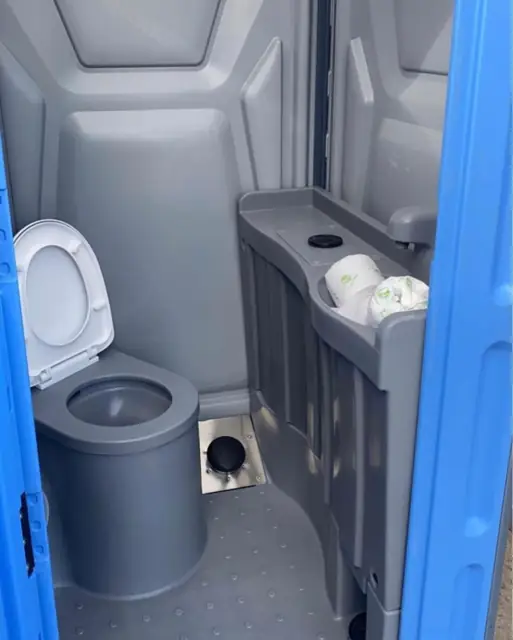
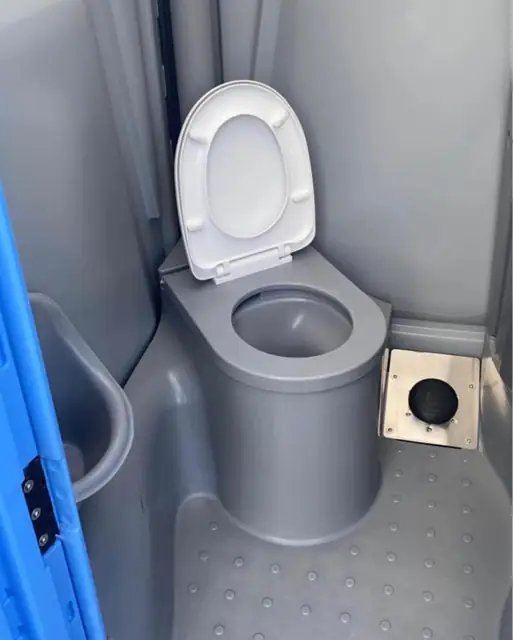
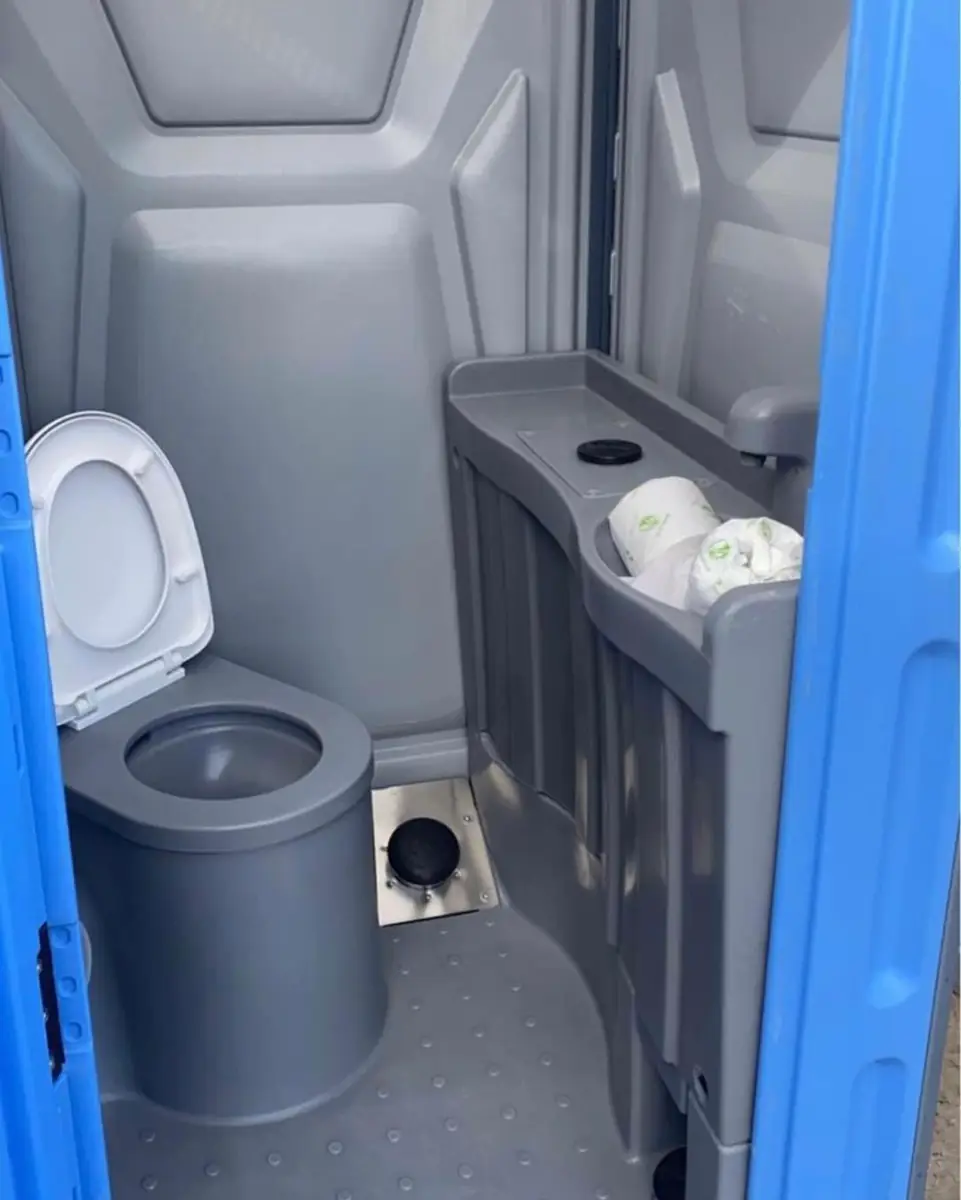
A wheelchair-accessible porta potty has a ground-level floor with no step, a wide self-closing door, grab bars beside the seat, a lower seat height and enough room inside for a wheelchair to turn. The manufacturer designs the interior around a 60-inch-diameter turning space, about twice the floor area of a standard unit.
- Footprint: about 7.5 by 7.5 feet, so plan a flat area of about 8 by 8 feet.
- Place it on a hard, level surface with a smooth route to the door; no gravel ruts, curbs or steep grass.
- Face the door toward the main path, not toward a wall or fence.
We describe these units as wheelchair-accessible. Whether a whole site meets ADA rules also depends on the route to the unit and its placement, which the organizer controls.